
YES!! SUMMARY JUDGMENT!! COURT SPANKS ADMINISTRATION FOR TYING HOMELAND SECURITY FUNDING TO COOPERATION WITH ICE
“Defendants’ wanton abuse of their role in federal grant administration is particularly troublesome given the fact that they have been entrusted with a most solemn duty: safeguarding our Nation and its citizens. While the intricacies of administrative law and the terms and conditions on federal grants may seem abstract to some, the funding at issue here supports vital counterterrorism and law enforcement programs. Some of these programs were likely involved in the response to the tragic mass shooting at Brown University that recently occurred within this Court’s territorial jurisdiction. To hold hostage funding for programs like these based solely on what appear to be Defendants’ political whims is unconscionable and, at least here, unlawful. As such, for the foregoing reasons, the Court GRANTS Plaintiffs’ Motion for Summary Judgment”
Thus concludes a most excellent order in the case of State of Illinois v. Noem. The entire memorandum and order (48 pages and included for Notes from the Front members) reads like a masterclass not only on what is and isn’t permissible under the Administrative Procedures Act (APA) when it comes to the tying of government funding to… you know… “you have a nice state here, it’d be a shame if something happened to it”… but very specifically to *actually* “you have a nice state here, it’d be a shame if something happened to it, because we’re not letting you have *homeland security* funding if you don’t play nice with ICE.”
In addition to the State of Illinois, the other plaintiffs are California, New Jersey, Rhode Island, Connecticut, Delaware, District of Columbia, Massachusetts, Minnesota, New York, Vermont, and Washington.
Now that I ruined the ending, here’s the very first paragraph of this memorandum and order from Judge Mary McElroy of the United States District Court in Rhode Island:
“This case is another example of the executive branch’s recent attempts to tie federal grant funding to state and local government assistance with federal immigration enforcement. After a court barred the Department of Homeland Security (“DHS”) from expressly conditioning grant funding within its purview on such cooperation, DHS issued award letters to state governments indicating that hundreds of millions of dollars of anticipated awards to so-called “sanctuary jurisdictions” were being reallocated to other jurisdictions.”
Now, as those of you have followed me for a while will recall, THERE IS NO LEGAL DEFINITION OF “SANCTUARY JURISDICTION”! Remember how I’ve said that there can be no law predicated on something which itself has no definition, and that is true of the term “sanctuary jurisdictions”?
In the first footnote, the Court notes that “The parties supply no concrete definitions for what constitutes a “sanctuary jurisdiction,” instead relying on Department of Justice (“DOJ”) or DHS designations of jurisdictions that allegedly fail to cooperate with at least some facet of federal civil immigration enforcement. The Court hereinafter uses the term “sanctuary jurisdictions” to refer to those DOJ or DHS designations, rather than to jurisdictions’ immigration policies.”
Here the Court is basically saying “There is no definition of ‘sanctuary jurisdictions’, but DOJ and DHS consider them to be ‘jurisdictions that allegedly fail to cooperate with at least some facet of federal civil immigration enforcement’ so let’s use their own words.”
Note the last bit of that footnote: “rather than jurisdictions’ immigration policies.”
Why this is important: so far as I know, this is the first court opinion to address the matter of “what is a sanctuary jurisdiction?”, which may mean that other courts will be looking to it. And here, the Court did *not* give it a legal definition, but rather a working definition for this case, *and*, and this is the important bit, in so doing the Court said what a sanctuary jurisdiction is *not*. It is *not* based on the supposed sanctuary jurisdiction’s immigration policies, or *any* characteristic of the jurisdiction. It is entirely all in the administration’s head, and just like an Executive Order is not law, so the administration saying “if you won’t play baseball by my new rules that I made up, I’m going to take my bat and go home” doesn’t mean those are now the *actual* new rules of the game.
This may turn out to be a VBD (very big deal). Of course it may not, it depends on whether other courts take the ball and run with it.
Regardless, in *this* ruling it is a big deal, as the Court has ruled that for the purposes of this case sanctuary jurisdictions are those which allegedly won’t play ball with DOJ / DHS when it comes to immigration enforcement. Which is, as the Court articulates, demonstrably why the administration cut the Homeland Security funding to Illinois and other blue states.
So for a concrete example, here in this case, Illinois v. Noem, Illinois is *not* being fingered as a sanctuary jurisdiction because of its own policies with respect to immigrants. Illinois is being fingered as a sanctuary jurisdiction because it won’t play nice with ICE. This is a very important distinction, because the Administrative Procedures Act (APA) doesn’t allow administrative agencies to make funding decisions on a whim or, as the Court says in more than one place, “capriciously”. The APA doesn’t allow funding decisions based on whether the administration likes the way that a state interacts with it. It’s kind of like a parent doesn’t get to choose to not feed their child because their child is being a brat. (Now do you see what it is important that the Court chose to use the administration’s own definition of ‘sanctuary jurisdiction’?)
The Court goes on to explain that “In the wake of the September 11 terrorist attacks, Congress authorized the Homeland Security Grant Program (“HSGP”) to strengthen national security through grant funding to state, local, tribal, and territorial governments… These programs collectively aim to strengthen the nation’s ability to prevent, prepare for, protect against, and respond to acts of terrorism and other threats.”
In other words, to strangle the metaphor, the parent not only chose to not feed the child, but also decided to put the child out in the street in the middle of a gang war, simply because the child was, in the parent’s view, being a brat, and not just being a brat, but being a brat about something completely unrelated.
Bottom line: summary judgment for the states!
This is a great way to start the new year! (It actually was decided Christmas week, but a whole lot of people, including myself, were trying to take some time off over the holidays, so I hope you’ll forgive my getting this out to you on the first Monday of the year!)
Notes from the Front members: the full 48-page memorandum and order is in your inbox now.
To preserve original source documents before they can be tampered with (remember the 16 documents that mysteriously disappeared from the Epstein files?), and protect myself from claims of improper republication, and trolls, I don’t publicly share documents I find, I make them available privately to Notes from the Front members. Often these are non-public documents for which I have had to pay out of my own pocket in order to share them with you. Others of them may be public but I find the source originals for you and include explanations and insights based on my decades of law practice and as a law professor, with a side of snark. ;~)
You can join at the link below for immediate access to these documents, the archives, our private chat, etc.. – it’s $5 a month which both keeps the trolls out, and helps to cover my expenses for our private dropbox, for purchasing transcripts and documents to share with you, etc..
https://annepmitchell.substack.com/p/yes-summary-judgment-court-spanks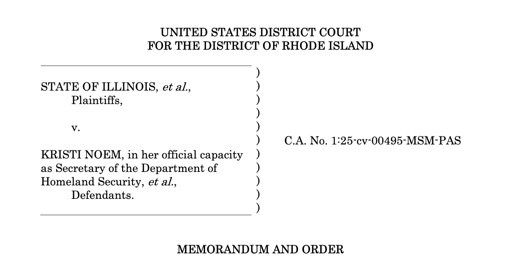
Source